

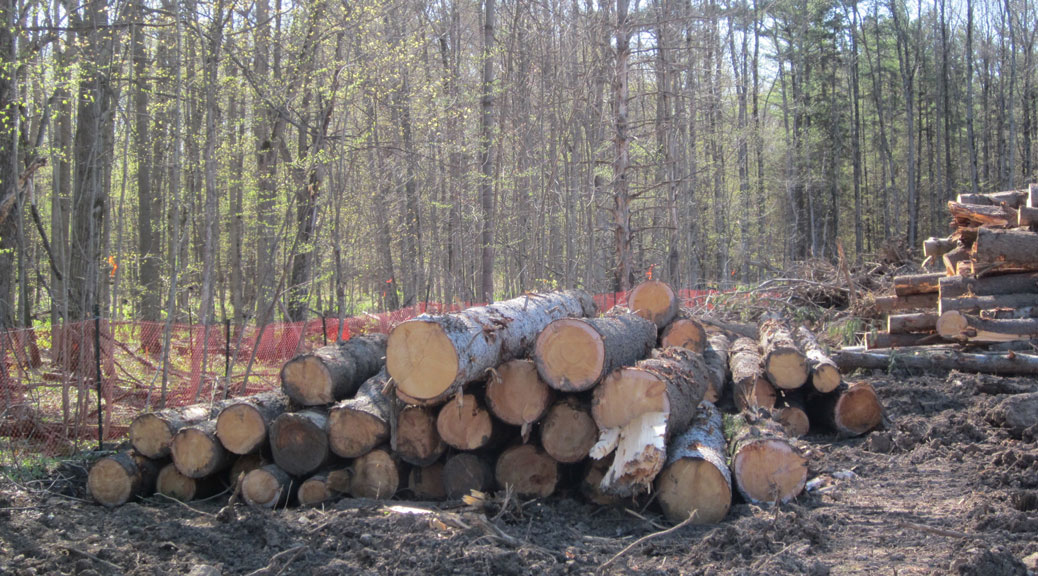
EDITOR’S NOTE: This photo shows a development site off Terry Fox Drive in Kanata that was recently clear cut during the height of the birthing season for mammals. Last month, the city’s planning committee approved a new Wildlife Construction Protocol with guidelines on “best practices” that developers should take to protect wildlife in construction areas. Donna DuBreuil is the president of the Ottawa-Carleton Wildlife Centre, and doesn’t think the protocol is strong enough.
The jury will remain out on Ottawa’s Wildlife Construction Protocol, at least until the public sees whether its recommendations are put into force.
It’s disappointing that the main implementation tool in the draft protocol has been eliminated in the revised version. Originally, developers were required to submit a Wildlife Mitigation Plan and Construction Site Management Plan. That’s been replaced only by ‘best practices’ guidelines, which will substantially eliminate the most effective means to reduce direct harm to wildlife during construction.
USEFUL TOOL OR EMPTY RHETORIC?
Best practices will mean little unless accompanied by an implementation plan and a demonstration of where best practices are actually being applied. As the onus has been removed from developers/contractors to submit plans, it now rests squarely on planning staff to ensure the protocol recommendations are part of the Conditions of Approval, particularly when large natural areas, with a variety of wildlife, are involved.
But, will planning staff consider this a priority? The controversial Client Relationship Leaders initiative undertaken by the City to provide a concierge service to developers increases, in many people’s view, the already imbalance between the development industry and community interests when it comes to planning matters.
Even if the protocol is considered a priority, are there staff resources to properly support it?
KEY ELEMENTS OF A SUCCESSFUL PROTOCOL
The goal of avoiding the most sensitive times of the year for the initial clearing of a site, when the greatest harm is done to wildlife, is a critical aspect for many.
This includes winter, when hibernating animals would be physically unable to escape and over-wintering species, forced to leave their dens and food caches, would likely freeze or starve to death. And, during the birthing season when newborns would have no chance of survival when nests and dens are destroyed with them in them.
The public will not accept that living creatures which feel pain and suffering are not accorded even the same degree of protection as trees receive under the City’s Tree Conservation Guideline. The initial stripping, digging, moving of earth and felling of trees in natural areas should not be an intentional death sentence for the animals that reside there.
FAILURE TO PROVIDE A CLEAR AND TRANSPARENT PROCESS
According to the City, the majority of the 106 comments received from the public were in support of the draft protocol. Why then, was it so significantly altered with respect to its implementation?
Stakeholders were assured that all submissions, both in support and opposed, along with staff comments would be in the report going to committee. That did not happen. Without a fair and transparent consultation process, citizen engagement and trust will continue to decline in Ottawa.
WHAT’S NEXT
A Wildlife Construction Protocol was first approved by former Regional Government 15 years ago. Not-so-fast forward, the City of Ottawa made a commitment to wildlife-sensitive planning in 2013. The Wildlife Construction Protocol will be the first important test of that commitment. With the number of development projects proposed or underway, it will not take long to see whether the City gets a passing or failing grade on this commitment.